


Metaprogramming Is Back, and It's Alive
For decades, metaprogramming was the black magic of computer science—programs that write programs, code that modifies itself. Most developers never touched it. Those who did wielded extraordinary power. Then it faded into obscurity, too complex for mainstream adoption. Now metaprogramming has returned with a vengeance, except this time the code isn’t just writing code. It’s thinking. It’s learning. It’s improving itself while you watch.

What Metaprogramming Actually Was
Imagine you’re writing a recipe. Normal programming is writing the recipe—step by step instructions the computer follows. Metaprogramming is writing a recipe that writes other recipes.
In the old days, this looked like:
- Code generation: Programs that output source code for other programs
- Macros: Instructions that transform and expand into larger code blocks before execution
- Reflection: Code that examines and modifies its own structure at runtime
- Template systems: Patterns that stamp out customized code variations
Languages like Lisp made this their identity. “Code is data” wasn’t a slogan—it was architecture. You could write programs that rewrote themselves mid-execution. Ruby developers used method_missing to conjure behavior that didn’t exist until called. C++ templates performed Turing-complete computation at compile time.
Why was this cool? Because repetition is the enemy. If you’re writing the same boilerplate 50 times, metaprogramming lets you write the pattern once and generate the 50 variations automatically. You stop being a typist and become an architect.
But metaprogramming had a fatal flaw: it was hard. Really hard. The abstractions were brittle. Debugging was nightmare fuel. The cognitive load was immense. So it stayed in the hands of language designers and framework authors—powerful tools that 99% of developers never touched directly.
The Magic Died. Now It’s Resurrected.
For twenty years, metaprogramming faded. Mainstream languages favored explicitness over magic. “Readable beats clever” became conventional wisdom. The dream of self-modifying programs retreated to academia and Lisp enthusiasts.
Then AI agents showed up and rewrote the rules.
AI agents are metaprogramming made accessible. They don’t just execute instructions—they reflect on their execution. They don’t just follow workflows—they improve the workflows themselves. The ancient dream of code that enhances itself is finally real, and you don’t need a PhD to wield it.
The New Metaprogramming Capabilities
Here’s what AI agents can do that classical metaprogramming never could:
Reflection That Thinks
Old reflection let programs examine their own structure. New reflection lets programs reason about their own behavior.
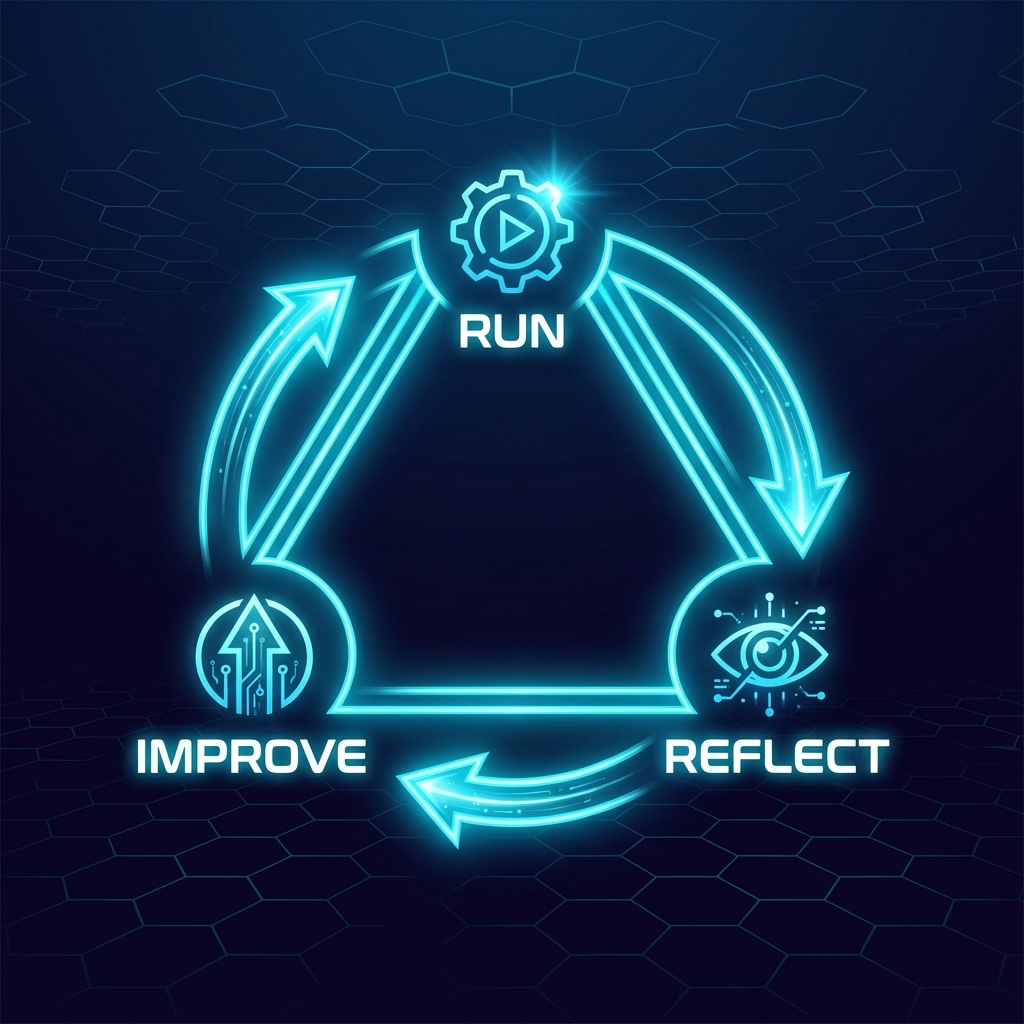
An AI agent can run a task, analyze the outcome, and conclude: “That approach was slow. Next time I’ll try X instead.” It’s not pattern matching—it’s genuine adaptation. The agent observes its own execution and forms opinions about how to improve.
Workflow Self-Improvement
You can teach an agent a workflow. But more importantly, you can teach an agent to critique and improve its own workflows.
“After each task, evaluate your approach. What worked? What didn’t? What would you do differently?” The agent internalizes this meta-instruction and begins refining its own processes. The workflow you wrote yesterday gets better today—without you touching it.
Autonomous Initiative
Classical metaprogramming was reactive. Something triggers the code generation; output appears.
AI agents can be proactive. They notice conditions, initiate actions, and start work without explicit invocation. “When you see a failing test, investigate and propose a fix.” The agent isn’t waiting to be called—it’s watching and acting.
Learning From Feedback
Here’s the real breakthrough: AI agents can learn from feedback and change their own behavior.
Tell an agent its output was wrong. Explain why. Watch it incorporate that feedback into future execution—not through retraining the model, but through context, memory, and self-modification of its approach. The agent updates its own operating instructions.
This is metaprogramming at a level the Lisp pioneers could only dream of. Not code generating code, but intelligence improving intelligence.
Why This Changes Everything
In the old model, you wrote code and it ran the same way forever. Changes required human intervention—new commits, new deploys, new releases.
In the new model, you configure an agent and it improves continuously. Today’s version is smarter than yesterday’s, not because you updated it, but because it updated itself based on outcomes.
The programmer’s role shifts from writing instructions to designing feedback loops.
You don’t tell the agent exactly how to work. You give it visibility into its own performance, criteria for success, and the freedom to adapt. The agent becomes a self-tuning system, iterating toward excellence without manual intervention.
This is the original vision of metaprogramming—code that transcends its initial implementation—finally made practical. And you don’t need to understand monads, macro hygiene, or compile-time type gymnastics to use it.
The New Stack
Here’s what meta-programming with AI agents looks like in practice:
- Rules and Preferences: Written instructions the agent reads and follows
- Memory Systems: Past interactions that inform current behavior
- Self-Evaluation Prompts: Instructions to reflect on performance after each task
- Feedback Channels: Ways to tell the agent what worked and what didn’t
- Autonomous Triggers: Conditions that allow the agent to initiate work independently
Stack these together and you have a system that learns, adapts, and improves without redeployment. The program writes itself—not through code generation, but through behavioral evolution.
Programs That Improve Themselves
Metaprogramming never really died. It just went dormant, waiting for a runtime capable of genuine reflection.
AI agents are that runtime. They close the loop that classical metaprogramming left open: not just code that generates code, but systems that evaluate, adapt, and evolve their own operation.
The black magic is now accessible to everyone. The only question is whether you’ll teach your agents to improve themselves—or leave them static while the world moves on.
Metaprogramming is back. And this time, it’s alive.