


Data Connectors Unlock Everything Else
Your AI agent might be brilliant, but if it can’t see your data, it’s useless. The first and most powerful unlock on your agentic journey isn’t a better model or a cleverer prompt — it’s connecting your agent to the apps and data you already use every day. One API key at a time, you stop being the copy-paste middleman and start running an intelligence operation. Every tool you leave disconnected is a question you’ll never have time to ask.

The Fastest Path to 1000x
Your agent can read, sift, combine, and synthesize information a thousand times faster than you can. But only if it can access that information.
Most people start their AI journey by typing questions into a chat box. That’s fine for learning. But the real unlock — the one that changes how you operate — is giving your agent direct access to your live data.
Not hypothetical data. Not copy-pasted snippets. Your actual Linear tickets. Your real Notion docs. Your live GitHub repos. Your financial dashboards.
Connected data is the difference between a chatbot and an operating system.
Start Read-Only, Expand Later
Connect via API key wherever possible. API keys are simple, stable, and work in headless environments — no OAuth dance, no browser sessions, no expiring tokens.
And start read-only.
Read-only access is low-risk and high-reward. Your agent can’t break anything, but it can suddenly:
- Report — Generate weekly summaries across all your tools
- Brief — “Here’s what happened overnight across Linear, GitHub, and Slack”
- Investigate — “Which customers filed support tickets AND had deployment failures this week?”
- Triage — “Rank these 47 open tickets by business impact using our revenue data”
- Discover — Surface correlations you’d never have time to chase manually
Once you trust the agent’s judgment — upgrade to read+write. Let it move tickets, draft docs, update statuses. But read-only gets you 80% of the value with 0% of the risk.
The Missing Connector Problem
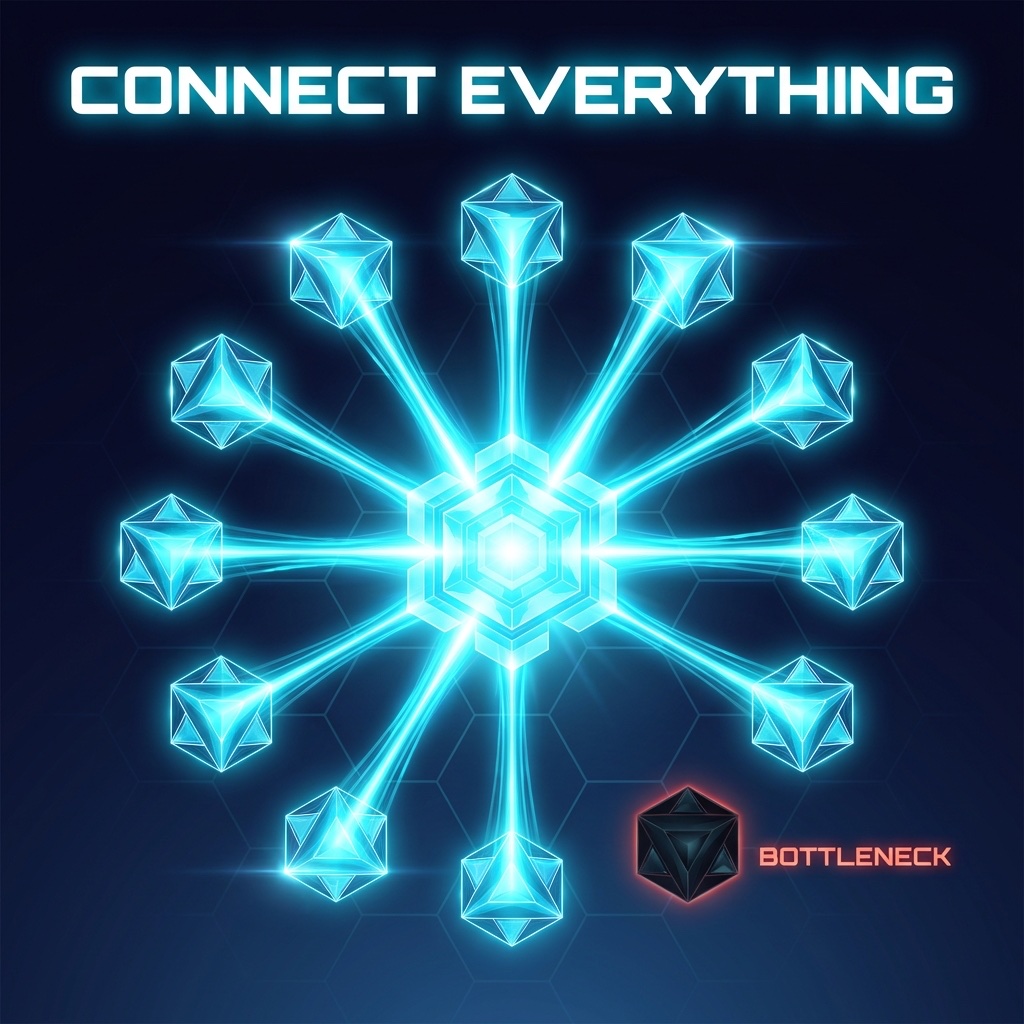
Here’s what nobody tells you: missing even one data connector keeps you as the bottleneck.
If your agent can see your project management tool but not your docs, you become the bridge. If it can read your codebase but not your customer data, you become the API. If it has access to everything except your calendar, you become the lookup service.
Every disconnected app is a question your agent can’t answer, a correlation it can’t find, and a report it can’t generate. You end up being the Human API — the slowest, most expensive integration layer in the system.
Connectors are how you stop.
The Starter Kit
If you’re beginning your agentic journey, here’s the playbook:
Step 1: Set up the most powerful terminal agent you can — Claude Code, Codex CLI, or Cursor. Something that can run tools and hold context.
Step 2: Connect your most-used data tools, one at a time:
| Category | Tools |
|---|---|
| Project Management | Linear, Jira, Asana, Shortcut, Monday |
| Documentation | Notion, Google Docs, Confluence, Dropbox Paper |
| Code & Engineering | GitHub, GitLab, Bitbucket |
| Communication | Slack, Discord, Microsoft Teams, Email (IMAP) |
| File Storage | Dropbox, Google Drive, OneDrive, Box |
| Meetings | Zoom, Google Meet, Otter.ai, Fireflies |
| CRM & Sales | Salesforce, HubSpot, Pipedrive, Close |
| Finance | Stripe, QuickBooks, Xero, Plaid |
| Analytics | Amplitude, Mixpanel, PostHog, Google Analytics |
| Support | Zendesk, Intercom, Freshdesk, Help Scout |
| Calendar | Google Calendar, Outlook Calendar |
| Databases | PostgreSQL, Supabase, Airtable, BigQuery |
You don’t need all of these. You need the ones you touch every day. Start there.
Step 3: Ask your first cross-tool question. Something you’ve always wanted to know but never had time to investigate. Watch the agent answer in 30 seconds what would have taken you an afternoon.
That’s the moment it clicks.
Connect Everything
The model doesn’t matter if it can’t see your world. The prompt doesn’t matter if the data isn’t there. The agent framework doesn’t matter if the pipes aren’t connected.
Connect your data. Or stay the bottleneck.