


Operate Before You Automate
Everyone building AI workflows wants to flip the switch and let it run. Most of them will regret it. The rush to full automation skips a phase that cannot be skipped—the phase where you, the human, operate the workflow yourself. Not just test it. Not just watch it once. Actually run it, trigger it, review its outputs, and make the final calls. This manual phase isn’t a bottleneck to eliminate. It’s the forge that produces reliable automation.

The Premature Automation Trap
You built an AI workflow. It looks good on paper. The agent runs, produces output, maybe even hits some APIs. You’re excited. The instinct is immediate: “Let’s schedule this. Let’s make it run every morning. Let’s remove the human from the loop.”
Stop.
Premature automation is technical debt you don’t see until it collapses.
When you jump straight to fully automated, you skip the learning phase. You don’t discover that the workflow fails silently on edge cases. You don’t notice that the output quality degrades on certain inputs. You don’t realize that one step in the chain makes assumptions that only hold 80% of the time.
Worse—if you gave that bot write access, financial capabilities, or the ability to message customers—you’ve handed a loaded weapon to a process you don’t fully understand.
The failures compound. The maintenance burden grows. And eventually, you’re debugging at 2am wondering why your “automated” system created chaos.
You Are Phase One
Before any workflow runs autonomously, you must run it yourself.
This isn’t about testing. Testing checks if it works. Operating teaches you how it works, when it works, and what it produces. The difference is the difference between reading about swimming and being in the water.
Here’s what operating a workflow yourself reveals:
- Process Understanding — You learn the actual flow, not the diagram. You see where context transfers, where decisions happen, where failures emerge.
- Quality Calibration — You develop intuition for what “good output” looks like from this workflow. Without operating it, you have no baseline. You can’t judge what you’ve never seen.
- Completeness Gaps — The workflow will have holes. Missing steps. Unhandled scenarios. Edge cases the designer (also you) didn’t anticipate. You only find these by running into them.
- Timing and Triggers — Is this workflow supposed to run daily? Weekly? On-demand? When you operate it manually, you learn the natural rhythm. You discover when the output is actually useful.
The Morning Report Pattern
Consider a concrete example: you want a morning report summarizing key metrics from your systems.
Wrong approach:
- Build the workflow
- Schedule it for 6am
- Wake up to a report that’s either wrong, incomplete, or formatted in a way you can’t parse
- Debug. Iterate. Repeat until frustrated.
Right approach:
- Build the workflow
- Every morning, you trigger it manually
- You review the output before sending it anywhere
- You notice that the database query is missing last-minute data
- You realize the summary format buries the important numbers
- You discover that Mondays need different handling than other days
- After two weeks of operating it, you understand the workflow intimately
- Now you schedule it—with confidence, with guardrails, with clear expectations
The manual phase wasn’t overhead. It was the crucible that produced a reliable workflow.
What You Learn by Operating
When you personally run a workflow multiple times, you accumulate knowledge that no amount of design or testing provides:
- Failure modes — Not theoretical failures, but actual failures. The API that times out on Tuesdays. The data that’s missing on month-end. The edge case that makes the agent loop infinitely.
- Quality variance — Good runs vs. bad runs. You learn to distinguish them. You develop criteria for “this needs human review” vs. “this is ready to ship.”
- Intervention points — Where do you find yourself stepping in? Those are the spots that need additional handling before full automation.
- Output consumers — Who actually uses this output? What do they need from it? You only learn this by delivering it manually and getting feedback.
The Graduation Criteria
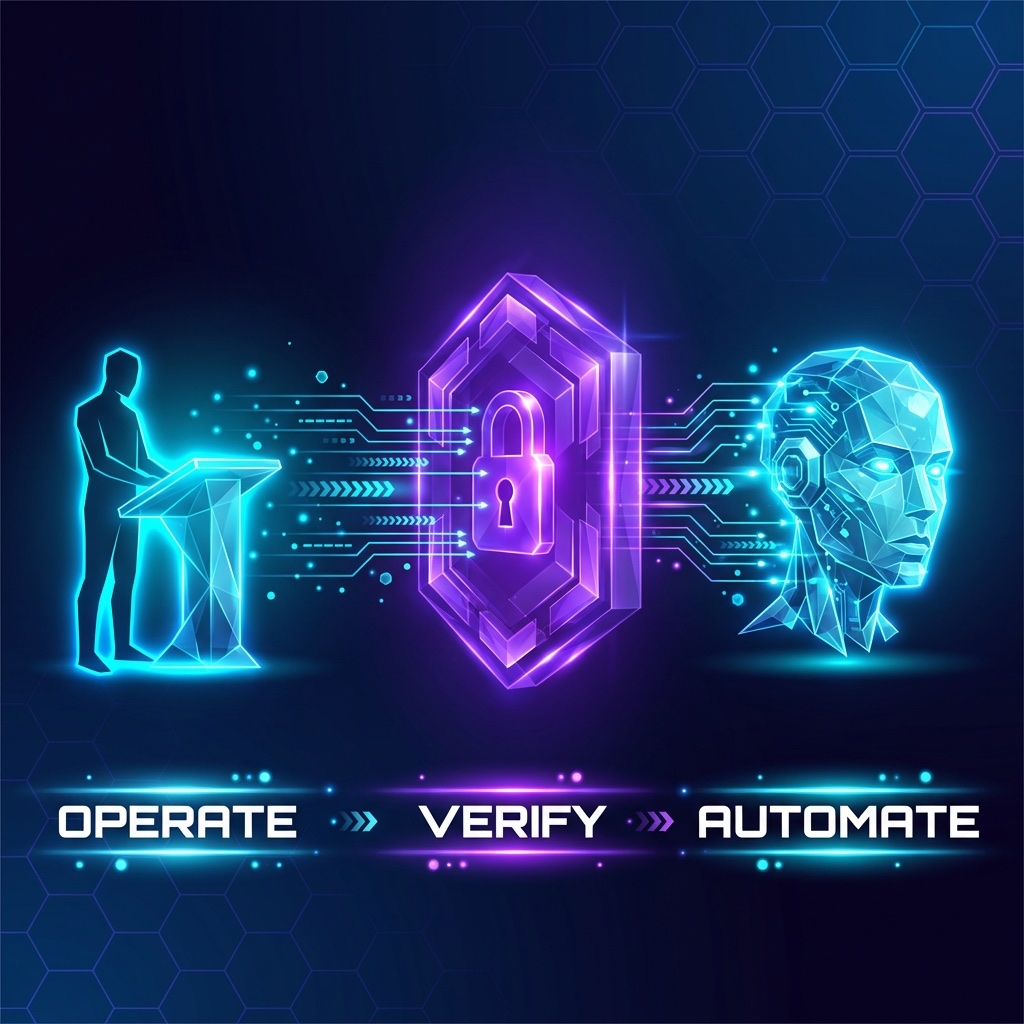
When do you move from operating to automating? When you can answer “yes” to all of these:
- You’ve run the workflow at least 10-20 times manually — Enough to see variance, not just the happy path.
- You can predict what the output will look like — No more surprises. You understand the range of outputs this workflow produces.
- You’ve documented the failure modes — And built handling for each one. Not “hope it doesn’t fail,” but “here’s what happens when it fails.”
- You’ve defined quality gates — Clear criteria for when output is good enough to ship vs. when it needs human review.
- You have an alerting plan — When the workflow runs autonomously and something goes wrong, how will you know?
If you can’t answer yes to all five, you’re not ready to automate. Keep operating.
The Paradox of Control
Here’s the uncomfortable truth: the people who move slowest through the manual phase end up moving fastest overall.
They understand their workflows. They don’t get surprised. They don’t spend weekends debugging runaway automation. Their systems actually work—not just sometimes, but reliably.
The people who rush to automation get the illusion of speed. They ship a workflow in a day and spend the next month maintaining it. They build five automated processes that are all slightly broken. They accumulate technical debt that compounds silently.
Patience in the operating phase buys velocity in the scaling phase.
Operate First
The impulse to automate is strong. You built something that works. You want it to keep working without you.
But the workflow doesn’t understand itself. You need to understand it first. And understanding comes from operating, not observing.
Drive it yourself. Feel the friction. Learn the rhythms. Discover the gaps. Build the confidence.
Then—and only then—let it run.
Operate before you automate. Your future self will thank you.
Not sure where to start? Pick one step in one workflow. That’s all it takes.