


Agentic Shells Are the New Application Layer
In 2025, AI applications came in two flavors: automation pipelines stitching together triggers and actions, or ordinary code making HTTP calls to an LLM API. Both approaches worked. Neither captured what agents actually need. Now in 2026, a new pattern has emerged—the Agentic Shell—and it’s fundamentally reshaping how we build AI-powered software.

The 2025 Landscape Was Limited
Last year’s AI app architectures fell into predictable buckets.
Automation loops like N8N, Make, and Zapier gave you visual workflows. Trigger fires, data flows, LLM gets called somewhere in the middle. Good for simple orchestration. Terrible for complex reasoning, iteration, or anything requiring genuine agency.
API wrappers were worse. You wrote Python or TypeScript, called openai.chat.completions.create(), and bolted on whatever context management you could stomach. Tool calling helped—you could give the model functions to invoke—but you still owned all the plumbing. Session state, file access, permission boundaries, error recovery: all on you.
Both approaches treated the LLM as a remote service to be called. A stateless oracle behind an HTTP endpoint.
That mental model is dead.
The Agentic Shell Pattern
The Agentic Shell treats the AI runtime as the application itself. Not a service you call, but an environment you inhabit.
Two implementations dominate:
Pattern 1: The IDE as Agent Shell
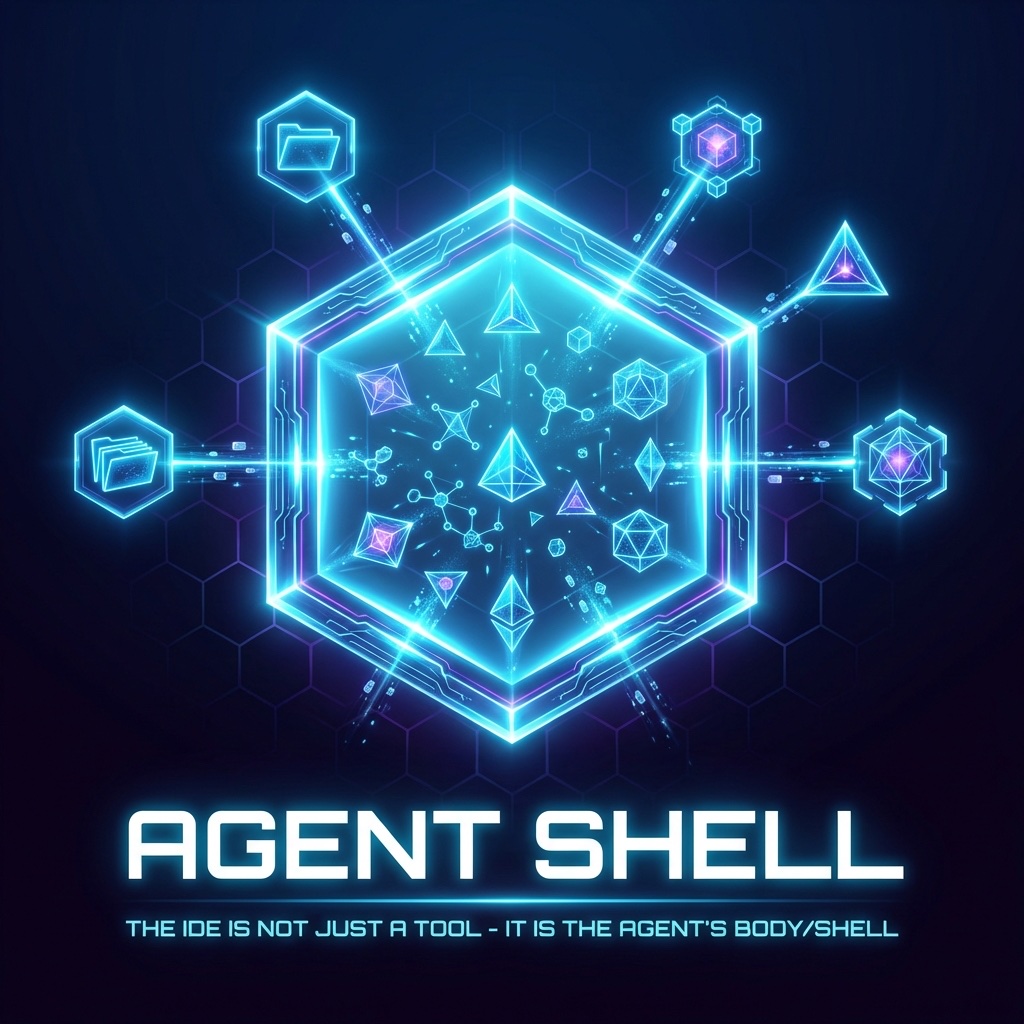
Cursor, OpenAI Codex, and Claude Code have become more than editors. They’re execution environments where AI agents live alongside your code, context, and tools.
In Cursor, MCP (Model Context Protocol) servers provide the agent with filesystem access, database connections, browser automation, and custom tools—all discoverable at runtime. The agent doesn’t call your code; your code extends the agent’s capabilities. Rules, memory, and artifacts persist across sessions. The IDE is the application shell.
Codex does the same from OpenAI’s angle: cloud sandboxes, GitHub integration, Linear and Slack context flowing directly into the agent’s reasoning. Tasks run end-to-end without you touching the keyboard.
This isn’t “AI-assisted development.” It’s AI as the primary executor, with humans providing direction and approval.
Pattern 2: CLI/TUI-Orchestrated Agents
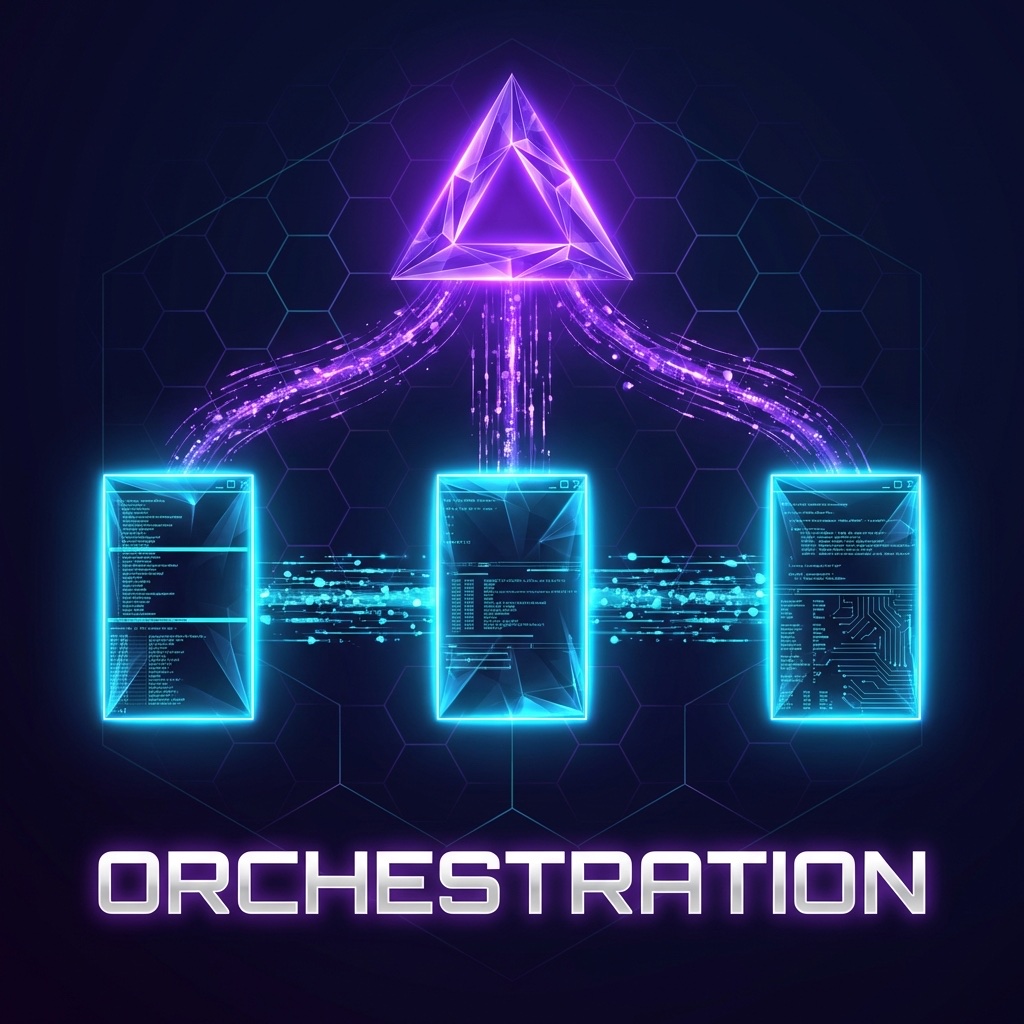
The second pattern builds around terminal-based AI interfaces. Shell scripts, cron jobs, apps invoking CLIs, TUI SDKs—all valid. The common thread: the agentic CLI is the execution engine, and your code orchestrates it.
Claude Code CLI, Codex CLI, Gemini CLI—these tools expose agentic capabilities through the terminal. You can invoke them programmatically, pipe context in, and capture structured output. They support session persistence, custom subagents, and slash commands. Your app becomes a thin orchestration layer; the CLI is the engine.
Ralph TUI takes this further: an AI Agent Loop Orchestrator that pulls tasks from your tracker, builds prompts from templates, spawns the appropriate AI CLI, monitors for completion, and cycles to the next task. Autonomous agent loops, running in your terminal.
Agentpipe enables multi-agent conversations—Claude, Gemini, and Qwen communicating in shared rooms through a TUI interface. Agents collaborating without human mediation.
Clawdbot provides a full agent runtime with memory systems, skills, plugins, and approval workflows. Your orchestration code becomes minimal; the agentic framework handles everything else.
Why This Matters
The Agentic Shell provides what raw API calls never could:
- Rich context management — Files, terminals, databases, and tools are first-class citizens, not JSON blobs you serialize into prompts
- Permission boundaries — Approval workflows, sandbox isolation, and scoped capabilities baked into the runtime
- Session persistence — Conversations continue, context accumulates, agents remember
- Tool ecosystems — MCP servers, plugins, and integrations available without writing plumbing code
- Composability — Orchestrators can spawn agents, agents can spawn subagents, scripts can orchestrate orchestrators
You get a harness, not just an endpoint.
The shell is the runtime. What you put inside it—the Agent Workspace—determines what the agent can actually do.
The Shift
In 2025, you built an application and called an LLM inside it.
In 2026, you configure an Agentic Shell and let it execute your intent.
The application layer has moved. Your code becomes configuration, rules, and tool definitions. The shell—Cursor, Claude Code, Codex, Ralph, Agentpipe—handles execution.
Builders who recognize this shift will ship faster. Those still wrapping API calls in bespoke orchestration code will wonder why their AI apps feel brittle and constrained.
Agentic Shells are the new application layer. Build inside one.